

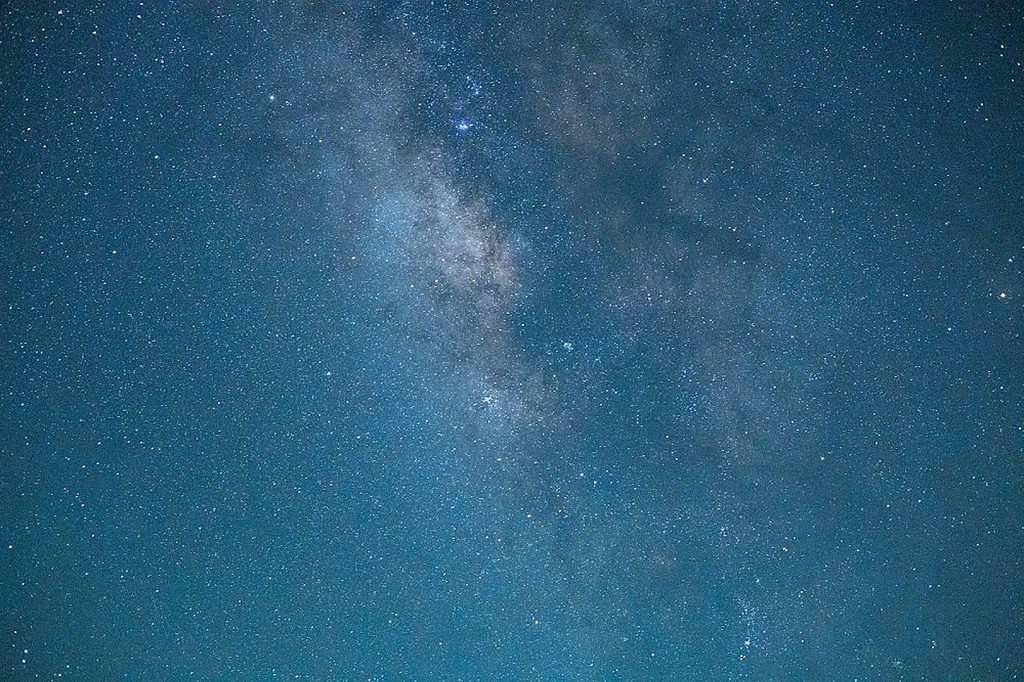
Al Quaa is a stretch of open desert roughly 90 minutes from Abu Dhabi city, near the Al Ain road toward the Oman border, widely regarded as the UAE’s darkest accessible stargazing location. It’s free to visit, open to the public with no gate or entry fee, and a regular 2WD car can reach the main viewing area — a 4×4 is only genuinely needed if you plan to venture further off-road.
Al Quaa isn’t the only spelling you’ll see — “Al Qua” appears just as often across maps and guides, referring to the exact same location.
When to Actually Go — Core Season vs. Comfort Season
Galactic core refers to the dense, bright band at the center of the Milky Way — the dramatic feature most people picture when they imagine seeing the galaxy.
The core is only visible from May to October, a fixed consequence of Earth’s position in its orbit, not a matter of local weather or air quality. October to April is genuinely a more comfortable season — cooler desert nights, often clearer air — but you’ll see a fainter band of stars without the dense core visible in summer. Neither season is simply “wrong”; they answer different priorities.
New moon timing matters in both seasons equally. Even a half-moon washes out enough ambient light to noticeably dull the Milky Way’s visibility, so checking the lunar calendar before planning a trip matters more than the season itself.
Best things to do in Abu Dhabi
Getting There and What to Bring
Al Quaa sits at coordinates 23.604633, 54.750256 — searchable directly on Google Maps, which is genuinely the most reliable way to navigate there given inconsistent mobile signal in the area.
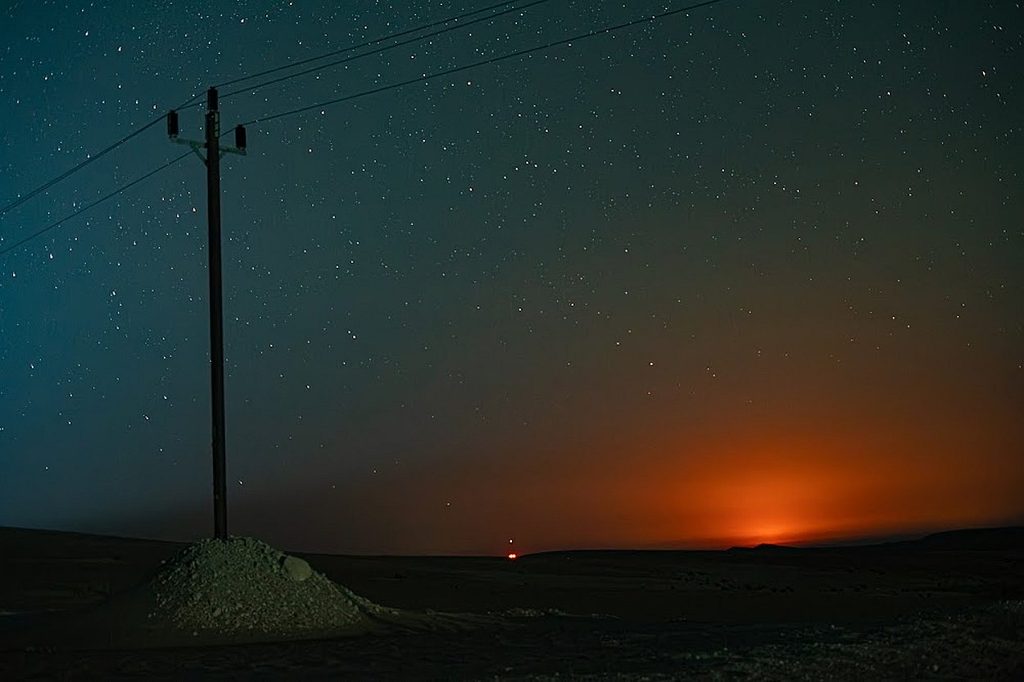
There are no facilities on site whatsoever — no toilets, no shop, no water point. Bring everything you’ll need: water, food, warm layers (desert nights get cold even in summer), a torch or headlamp, and a fully charged power bank, since phone battery drains faster in cold, dark conditions.
Pro tip: Best viewing hours run roughly 9 PM to 3 AM. Arriving right at sunset gives your eyes time to properly adjust to the dark before the sky is at its darkest — rushing straight from headlights into stargazing means missing the first 20–30 minutes of what your eyes could actually see.
Free vs. Guided — What Each Option Actually Gets You
Driving yourself and camping independently costs nothing beyond fuel and supplies. The desert itself is free and open to anyone. For those who’d rather not organize logistics themselves, several tour operators run guided overnight packages — typically ranging from around AED 400 to AED 2,000 per person, depending on inclusions like BBQ dinner, breakfast, telescope access, and return transport from Dubai or Abu Dhabi.
The stars themselves don’t change based on price — a guided package buys convenience, equipment, and company, not a better sky. Worth deciding honestly whether that convenience is worth the cost for your specific trip, rather than assuming a paid experience is required to see the Milky Way at Al Quaa.
Frequently Asked Questions
Do you need a 4×4 to reach Al Quaa?
No. A regular car can reach the main parking and viewing area, with most of the route paved and only a short sandy stretch near the site itself. A 4×4 is only necessary if you plan to explore further off-road.
Is Al Quaa free to visit?
Yes. The desert area is completely open to the public with no entry fee or gate. You only pay for fuel, supplies, and any optional guided tour you choose to book.
What is the best time of year to see the Milky Way at Al Quaa?
May to October for the Milky Way’s bright galactic core specifically, since this is fixed by Earth’s orbital position. October to April offers cooler, more comfortable camping conditions with a fainter but still genuinely impressive starry sky.
Do you need a telescope to see the Milky Way at Al Quaa?
No. The Milky Way’s core is visible to the naked eye on a clear, moonless night. A telescope adds detail for viewing individual planets and celestial objects, but isn’t required to see the galaxy itself.
Last reviewed: September 2026
Reviewed by: UAE Content Team
Source: UAE dark-sky location data, cross-verified across independent stargazing guides
